

Tulsi Tea
Herbaceous, minty… sacred? In India, tulsi is known as Holy Basil and is considered to be not only a panacea, but also a physical manifestation of a goddess. Wow! Scroll down to learn more.
If you're new to tulsi, we recommend starting off with our Harmony Tulsi Herbal Tea or Holy Detox Herbal Tea.
If you love spice, try our bold Tulsi Chai Black Tea and our Orange Spice Tulsi Herbal Tea.
Tulsi Tea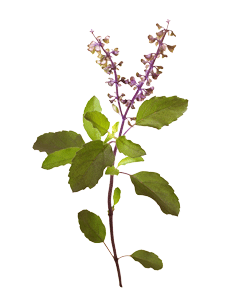
The tulsi plant (pronounced tool-see), has been a part of the Indian society and religion for thousands of years. It is a member of the Lamiaceae family and grows throughout the Old World tropics. Tulsi herb is a pure and natural herbal tea, which does not contain any caffeine and tastes delightful with a mild slightly sweet mint flavor. First mention of the plant can be found in the oldest Sanskrit Ayurvedic text, which was written around 600 BC. In Sanskrit, Tulsi means “one that is incomparable” or one that does not permit similarity. According to legend, the ancient rishis (spiritual seers) recognized the plant's numerous health benefits and healing powers and declared the plant, deity. Since tulsi (an oxymum sanctum plant) can treat hundreds of diseases, it is often referred to as the Queen of Herbs or Holy Basil(not to be confused with its Western cousin, ocymum basilicum). Although the tulsi plant grows abundantly in other places, it is most prevalent in India where it plays a major role in every part of healing, religion, spirituality and culture.
Tulsi tea is cultivated for religious and medicinal purposes. In fact, farmers perform a spiritual ritual before tending to tulsi. For them, the process of harvesting the plant is just as important as receiving its benefits. In the Puranas, a sacred Hindu text, anything involving the tulsi plant is considered holy. Hindus believe that the Creator lives on its branches and other gods reside on its leaves. Conversely, there are at least three types of tulsi: Rami tulsi,(the most common) Krishna tulsi, and Vana tulsi. The Ayurvedic practice uses tulsi tea to treat the body, mind and spirit. The philosophy is that keeping the body healthy keeps the mind healthy and free of worry. As a result, the natives are able to concentrate on worship.
Scientists concede that the nutritional and medicinal composition of the tulsi plant is extremely intricate. First, the plant is infused with hundreds of protective compounds and health promoting properties. Together, they stimulate the immune system by increasing the production of antibodies. Furthermore, current studies reveal a host of health benefits. Research shows that tulsi improves stamina, protects against stress, and increases the body’s ability to use oxygen. In addition, the antibacterial, antiviral and antifungal properties protect against radiation, prevent gastric ulcers, reduce inflammation, and lower fever.
Tulsi has endless preventative and curative properties. Consequently, the best way to maintain a healthy body and mind is with an infusion of tulsi tea. With its rich supply of antioxidants and other nutrients, tulsi herbal tea is fast becoming a popular drink among the health-conscious.
MOREHerbaceous, minty… sacred? In India, tulsi is known as Holy Basil and is considered to be not only a panacea, but also a physical manifestation of a goddess. Wow! Scroll down to learn more.
If you're new to tulsi, we recommend starting off with our Harmony Tulsi Herbal Tea or Holy Detox Herbal Tea.
If you love spice, try our bold Tulsi Chai Black Tea and our Orange Spice Tulsi Herbal Tea.
Tulsi Tea
The tulsi plant (pronounced tool-see), has been a part of the Indian society and religion for thousands of years. It is a member of the Lamiaceae family and grows throughout the Old World tropics. Tulsi herb is a pure and natural herbal tea, which does not contain any caffeine and tastes delightful with a mild slightly sweet mint flavor. First mention of the plant can be found in the oldest Sanskrit Ayurvedic text, which was written around 600 BC. In Sanskrit, Tulsi means “one that is incomparable” or one that does not permit similarity. According to legend, the ancient rishis (spiritual seers) recognized the plant's numerous health benefits and healing powers and declared the plant, deity. Since tulsi (an oxymum sanctum plant) can treat hundreds of diseases, it is often referred to as the Queen of Herbs or Holy Basil(not to be confused with its Western cousin, ocymum basilicum). Although the tulsi plant grows abundantly in other places, it is most prevalent in India where it plays a major role in every part of healing, religion, spirituality and culture.
Tulsi tea is cultivated for religious and medicinal purposes. In fact, farmers perform a spiritual ritual before tending to tulsi. For them, the process of harvesting the plant is just as important as receiving its benefits. In the Puranas, a sacred Hindu text, anything involving the tulsi plant is considered holy. Hindus believe that the Creator lives on its branches and other gods reside on its leaves. Conversely, there are at least three types of tulsi: Rami tulsi,(the most common) Krishna tulsi, and Vana tulsi. The Ayurvedic practice uses tulsi tea to treat the body, mind and spirit. The philosophy is that keeping the body healthy keeps the mind healthy and free of worry. As a result, the natives are able to concentrate on worship.
Scientists concede that the nutritional and medicinal composition of the tulsi plant is extremely intricate. First, the plant is infused with hundreds of protective compounds and health promoting properties. Together, they stimulate the immune system by increasing the production of antibodies. Furthermore, current studies reveal a host of health benefits. Research shows that tulsi improves stamina, protects against stress, and increases the body’s ability to use oxygen. In addition, the antibacterial, antiviral and antifungal properties protect against radiation, prevent gastric ulcers, reduce inflammation, and lower fever.
Tulsi has endless preventative and curative properties. Consequently, the best way to maintain a healthy body and mind is with an infusion of tulsi tea. With its rich supply of antioxidants and other nutrients, tulsi herbal tea is fast becoming a popular drink among the health-conscious.